Behind the Benefits: Information Governance Spotlight
At FPPA, information is more than paperwork and data points—it’s one of our most valuable assets. Over time, what once centered on traditional records management has grown into a broader, more strategic function: the Information Governance (IG) Department. The IG department plays a critical role in safeguarding the data that supports FPPA Members, Employers, and staff. With a combined 28 years of experience at FPPA, this two-person team brings both deep institutional knowledge and a forward-looking approach to managing information in an increasingly complex digital world. In a nutshell, the IG team is dedicated to protecting, managing, and maximizing the value of FPPA’s information.
Team Mission
The mission of Information Governance is to minimize information risk and cost while maximizing information value. The IG team ensures that FPPA’s information and data are treated as valuable assets, not liabilities. That means protecting sensitive data, meeting legal and regulatory requirements, and making sure information is accessible, accurate, and useful when it’s needed most. With the ever-increasing volume of digital data and the integration of advanced technologies into daily operations, information governance helps align FPPA’s information practices with security, compliance, and organizational priorities.
Evolving Records Management
Records management remains a core responsibility within the IG department, but its scope has expanded dramatically. Gone are the days of paper files filling offices. In the digital age, records are housed in numerous systems, repositories, web platforms, and other digital environments, reflecting the modern ways information is created and stored. Today’s fast-paced, digital environment requires a comprehensive governance program that can handle massive volumes of data, strict regulations, increasing cybersecurity demands, and the rapid rise of artificial intelligence.
A Day in the Life of Information Governance
The IG team acts as a bridge between people, processes, and technology. They work with our staff to identify the most important information, understand our business objectives, then help create secure, private, and compliant workflows in support of those goals. Through training, guidance, and hands-on support, they help staff feel confident managing information effectively while complying with regulatory and business requirements. The team serves as system administrators, working in close partnership with IT to ensure that the tools and platforms FPPA relies on support sound information management.
The IG team works to reduce duplication, mitigate risks, manage costs more effectively, and deliver greater overall value. It's a role that requires both technical fluency and strategic thinking—and one that grows more critical as FPPA’s digital footprint continues to expand.
Projects and Programs
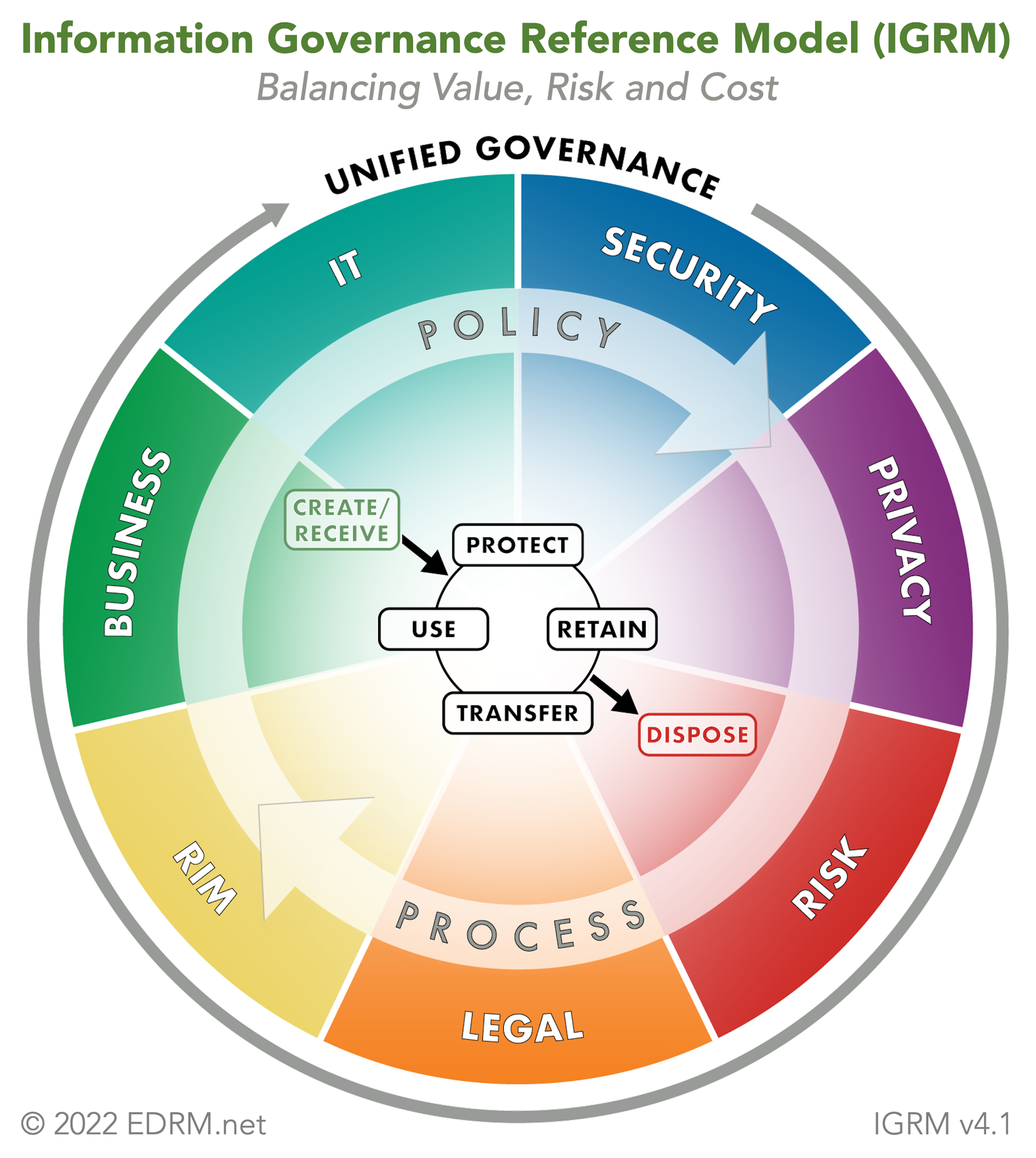
Projects within the IG department are aligned to the Information Governance Reference Model, which serves as the foundational framework for information governance practices. The IG team oversees several projects and programs to support FPPA’s operations, including:
- The organization’s records repositories and inventories, ensuring that information is properly organized and accessible. They manage retention and disposition procedures according to legal requirements and industry standards, ensuring records are kept for the required period and disposed of correctly.
- Data classification and sensitivity labeling, helping the IG team to oversee the data in FPPA systems from beginning to end. The team helps our staff to properly classify sensitive data so it is handled appropriately.
- Vendor management, which oversees the contracts between FPPA and our third-party partners, and evaluates risks associated with vendors. This system allows FPPA to handle contracts efficiently and address any potential risks to the organization.
In Their Own Words: The Importance of Information Governance
“Information Governance is the cornerstone of effective information management in the digital age. It provides organizations with the framework needed to navigate the complexities of data, ensuring security, compliance, and the maximization of data value. As businesses continue to rely on data for strategic decision-making, the importance of information governance will only continue to grow. It's not just a best practice; it's a necessity for organizations looking to thrive in a data-centric world.”
-Vicki Willis, Information Governance Manager